


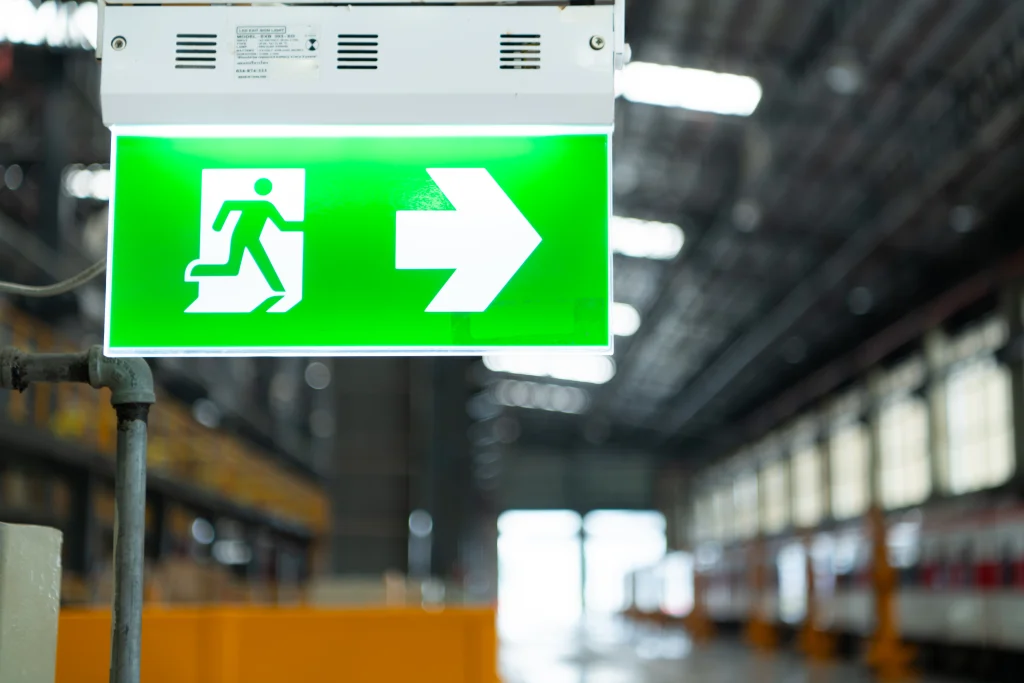
What is Emergency Safety Lighting System?
An Emergency Lighting System is a standup feature designed to provide illumination during power failures, ensuring safe evacuation or movement within a building. These systems automatically activate when the main power supply is disrupted, offering crucial visibility in areas like staircases, corridors, and exits. They play a vital role in preventing panic and guiding occupants to safety in emergencies such as fires, blackouts, or natural disasters.
Get 24/7 Instant Electrician for Services & Repair Today
Book a free consultation to find the Electrical services installation and repair.
FREE QUOTE REQUESTEmergency lighting typically includes emergency escape lighting and standby lighting:
Emergency Escape Lighting ensures that exit routes and safety equipment remain visible during an evacuation.
Standby lighting provides general illumination for continued operations in case of power outages.
What are the Types of Emergency Safety Lighting Systems?
The types of emergency safety lighting systems are including emergency escape lighting, standby lighting, sustained, non-maintained and maintained emergency lighting systems.
Emergency Escape Lighting
This type ensures safe evacuation by illuminating escape routes, exits, and critical safety equipment. It includes:
Escape Route Lighting: Guides occupants along predefined paths to safety.
Open Area Lighting (Anti-Panic Lighting): Reduces panic in larger spaces by providing sufficient illumination to locate exits.
High-Risk Task Area Lighting: Provides additional light in areas where dangerous tasks are performed, ensuring safety during shutdowns.
Standby Lighting
Standby lighting allows continued operation of essential tasks when the main power supply fails. It’s commonly used in facilities where maintaining operations is critical, such as hospitals or data centers.
Sustained Emergency Safety Lighting Systems
These systems have a separate lamp for emergency use, which operates independently of the main power. They are ideal for areas requiring constant illumination during power outages.
Non-Maintained Emergency Safety Lighting Systems
Non-maintained systems remain off during normal conditions and only activate in case of a power failure. These are commonly used in workplaces and commercial buildings to comply with safety regulations.
Maintained Emergency Safety Lighting Systems
Maintained systems are always on, serving as both regular and emergency lighting. These are typically installed in public areas like theaters and shopping centers, where continuous illumination is crucial.
What are the Emergency Safety Lighting Rules in Ireland?
In Ireland, emergency lighting is a legal requirement in buildings to ensure the safety of occupants during power outages or emergencies. The rules are governed by specific standards, including IS 3217:2013+A1:2017, which outlines the design, placement, and maintenance of emergency safety lighting systems. Here’s what you need to know:
Where Emergency Safety Lighting is Required?
You must place emergency lighting in high-occupancy buildings such as offices, schools, hospitals, hotels, and retail spaces. Key areas include:
- Escape routes
- Stairwells and corridors
- High-risk areas and task zones
- Emergency exits and signage
- Assembly points
- Illumination Standards
- Escape routes must have a minimum brightness of 1 lux.
- Open areas larger than 60 square meters require anti-panic lighting with at least 0.5 lux.
- High-risk task areas should maintain 15% of normal lighting levels or at least 15 lux, whichever is higher.
Duration Requirements
Emergency lighting must remain operational for a minimum of 1 hour in small premises and 3 hours in larger or more critical buildings, depending on the evacuation strategy.
System Testing and Maintenance
Regular testing is mandatory to ensure reliability. You are required to:
- Perform monthly functional tests to confirm activation and lamp functionality.
- Conduct a full annual test to check battery capacity and system performance.
- Keep records of all tests and maintenance for inspection.
Signage and Exit Marking
All emergency exits must be clearly marked with illuminated signs. Signs should conform to ISO 7010 standards and be visible from all parts of the building.
Legal Compliance and Penalties
Compliance with emergency lighting rules is enforced under the Safety, Health, and Welfare at Work Act 2005 and Fire Services Acts 1981 and 2003. Failure to comply can result in fines, legal action, or closure of the premises.
What are the HSE Guidance on Emergency Lighting?
The Health and Safety Executive (HSE) provides guidance on emergency lighting which includes Purpose of Emergency Lighting, design and placement Standards, Mandatory Testing and Maintenance, Emergency Lighting Duration and importance areas to install. Here’s a detailed guide below.
Purpose of Emergency Lighting
Emergency lighting must illuminate escape routes, exits, and safety equipment to allow safe evacuation and reduce the risk of accidents during emergencies like fires or blackouts.
Design and Placement Standards
According to HSE, emergency lighting should comply with standards such as BS 5266-1. This ensures proper placement and adequate illumination levels, including:
- 1 lux for escape routes.
- 0.5 lux for open areas to prevent panic.
- Higher illumination levels in high-risk task areas as required.
Mandatory Testing and Maintenance
HSE recommends regular testing to ensure that your emergency safety lighting system functions effectively:
- Daily visual checks to confirm power supply and indicator light functionality.
- Monthly functional tests to verify the activation of lights.
- Annual full discharge tests to assess battery capacity and system performance.
- Maintaining test records is essential for compliance and inspection.
Emergency Lighting Duration
HSE guidance specifies that emergency lighting should remain operational for at least 1 to 3 hours, depending on the building type and evacuation strategy.
Key Areas for Placement
The guidance stresses that emergency lighting must be placed in critical areas such as:
- Escape routes
- Staircases and corridors
- High-risk zones
- Fire safety equipment locations
- Emergency exits and signage
Legal Compliance
Emergency lighting is required under the Fire Safety Order 2005 and the Health and Safety at Work Act 1974. Non-compliance can lead to penalties, including fines and legal action.
Emergency Lighting Completion Certificate
After placing or modifying an emergency safety lighting system, you must obtain an Emergency Lighting Completion Certificate. This document confirms that:
- The system is placed according to standards such as IS 3217 (Ireland) or BS 5266-1 (UK).
- The design meets required safety and performance criteria.
- The system has been properly tested.
Periodic Inspection Certificates
Regular inspections are mandatory, and you may need a Periodic Inspection Certificate to verify that the emergency lighting remains functional and compliant over time. These inspections assess:
- Battery capacity and duration (typically 1–3 hours).
- Illumination levels (e.g., minimum 1 lux for escape routes).
- System integrity and proper operation of all components.
Legal Requirements
Certificates are required to comply with:
- The Fire Services Acts and Health and Safety at Work Act.
- Local fire safety regulations.
- Non-compliance can lead to fines, legal action, or building closure.
Importance of Certification
Certification provides evidence that your system meets safety standards, ensuring you are prepared for emergencies and protecting building occupants. It’s also necessary for insurance purposes and may be required during audits or inspections by local authorities.